We decided to spend a few days of Ramadan in a different city this year – something we always wanted to do. We checked Dullstroom and Bergville but ended up in the place that never disappoints – Durban!
Part of the objective of the trip was to try out different masajids to experience Durban taraweeh. At this point it is worth mentioning that the title of this blog came as a result of a conversation between Khariunnisa and her friend Fatima Asmal where she called us “Taraweeh Loafers” and we quite liked it 😉
What follows is a brief description of our experiences at each of the Taraweeh venues visited:
La Mercy Masjid – 13 July ’14 / 15 Ramadan 1435
5 minutes from Umdloti, was our Taraweeh venue tonight. We would only reach Umdloti an hour after Iftaar so a quick search to find the closest masjid yielded in a phone call to the listed contact for this masjid to find out if there was place for women to follow Taraweeh. Yes upstairs was the answer. So we reach our accommodation quickly prepare for Taraweeh and leave.
Approaching the masjid, the usual dread overcame us and thoughts of where the ladies entrance would be and will there be strange looks from the locals seeing a woman here for Taraweeh entered our minds. The stress quickly dissipated as we saw the ladies entrance just next to the the men’s – no #sideentrance
We parted ways, I went I read my Esha while the pre taraweeh Tafseer went on. After my fardh salaah, messaged @khairunnisakhan to see of she was fine, and the response was “yes and I can see the imam” with a smiley.
The imam had a good sense of humour, there were duas and duroods after every 2 raka’ah and chilled crowd. Very nice first taraweeh in Durban! Alhamdulillah and JazakAllah La Mercy Masjid
Sometime after we met, we decided to go on a journey – an epic (at least by our standards) overland journey. As the years went by we slowly continued planning for it but as life goes and responsibilities piled up and it got pushed the bottom shelf of our priority list many times over.
Then suddenly in mid 2013, through the grace of Allah, it jumped out the bottom shelf and placed itself on the desk for planning to begin.
Step 1 – Find a car! We needed the right vehicle to take us on this journey. So after long (and typical) Defender vs Cruiser research we agreed that the Cruiser was the right option. The search began… after much search and little looking this piece of brilliant Japanese machinery caught our eyes and our hearts.
We purchased and started researching options for overland preparation.
Enter Paul…
A colleague at Farhaan’s new job hears about our plans and mentions his friend from the UK who used to build expedition vehicles there! – Alhamdulillah!
So we meet Paul Marsh, have a few meetings and are on our way to putting down a list of requirements. He agrees to project manage the build of the vehicle due to his knowledge, experience and contacts in the industry. A few more meetings with Paul and we decide (due to Paul’s location) that we will send our car to him in Cape Town and do the build there.
January 2014 – Awning and Bullbar is installed
Feb 2014 – We took the Cruiser down to Cape Town and dropped it off with Paul.
Next Step – Paul takes the Cruiser to the “Land Cruiser Whisperer” Johan from JB Autos to do full mechanical look over due to it being second hand.
From there to Alucab to install our EeziAwn tent which was sent down from Joburg…
Now to conduct Test 1.0 – mechanical, Tent and Awning – in the next post…
We often heard about the kindness of strangers from other Overlanders and got experience it firsthand in Addis Ababa, Ethiopia.
The drive from the border town of Moyale to Addis Ababa took 3 days. It started off with a very stressful border crossing on Ethiopian side – more on this in an upcoming blog post.
By the time border formalities were completed, it was almost 5pm but we did not want to spend the night here. We decided to push on and see how far we get. A few kilometres or good tar road later, the very familiar light brown gravel showed itself in the distance and we braced ourselves for another day of slow going.
We heard of these but did not imagine we would be privy to it. Until Addis, after a really hectic night having driven like 14 hours, sleeping awfully late and spending way too much of our budget out of desperation we walked onto the road checking out of our hotel and met Brook. He came to speak to us, ended up inviting us into his home for the next few days, showed us around, helped us out and left us completely overwhelmed by his kindness. All he wants in return is for us to “pay it forward” so in his words…”awesome!”
If you like me have been sabotaged by Microsoft’s latest Windows 10 Creator Update and you own a HP laptop, you maybe finding it frustratingly difficult to restart your laptop in Safe Mode so that you can troubleshoot your problem.
After trying many times I figured it out. Here goes:
Restart your laptop
Press Escape multiple repeatedly as soon as it start to boot up
Then you will be provided with the HP startup options
Choose the option that says Boot Device Options (F9)
When we first started looking for furniture stores to furnish our apartment, the same names kept coming up on internet searches and blogs. We were not very keen on the couches/sofas and beds we saw at IKEA, Home Center, Homes r US and any other large furniture stores, so we did a lot of research and visited many of the shops (online and physically). They all have furniture at different price levels and stuff that looked really good. Nonetheless, we wanted to make all our research available to YOU! The Dubai newbie, looking to furnish their place and not sure where to start.
The list below is in not particular order and we are in no way advertising for any of these stores. This is purely a list of shops you can look at when making your furniture decisions. If we have purchased from or interacted with any of these stores we will provide a note on this.
Important things to keep in mind
If you are visiting a smaller store’s website, don’t get excited by a piece and think that you will get it. These websites are often not updated with latest stock so often we would like something only to find out they don’t stock it any more, or they will have to order it from another country which can take anything from 3-8 weeks.
Of course if you like a piece and the shop has it in stock, go and check it out! Test it. Get a feel for it. Find out the warranty and guarantee available and whether it is valid internationally. Also confirm that they have brand new piece in stock that they will send you.
On warranty, if you get this response, “Don’t worry, if there is something wrong we will fix it”, then there probably isn’t any and you should be very sure that you want that product.
Its worth checking out reviews on Google Maps. Of course you will always see both negative and positive reviews, but try a get a feel for where other customers have had keys issues. e.g. faulty products, after-sales services, missing part with no corrective actions.
You can pick up some great deals during sales – and there are sales very often but also beware of some websites that always seem to have a sale price. They may be comparing the price of the original designer piece to their replica and advertising it as a huge saving.
Purely online store – no showroom. You can arrange a visit to the warehouse to view specific pieces. We did not have a great experience with them but others seeemed happy with the service.
We bought our low table and floor chairs from them and we love it. They are Japanese a store and keep everything from furniture to household products and clothing, all designed on the principle of simplicity.
They have some nice pieces on the website. When we called to enquire about one of them, they said it was not in stock anymore. Google Maps reviews are not great.
They have some very nice designs on their website but they don’t have much of a showroom – its more of an office with some pieces displayed. They get their furniture made overseas so if its not in stock there will be a lead time. Prices seem affordable.
They have some very nice modern designs and prices are in the mid range. We bought our bed from them. Their service was professional and after sales services was good. There was some lead time on the side tables and headboard. Side tables were delivered exactly as promised and we expect the headboard in a month.
Very beautiful Italian furniture! We bough their cheapest 3-seater couch on sale but the service was still great. Hatim was our sales person and we would suggest talking to him. There was another lady there that assisted with invoicing who insisted that Farhaan did not know how to spell his own name correctly and went on spell it her way on the invoice! Prices are in the higher ranges.
Imported French furniture. They had some very nice beds in the mid-range pricing – but that was during the sale period. If they don’t have stock of what you want there will be a lead time on delivery.
We only saw their website and enquired about a couple of their couches. Their prices were way out of our range but they have some really beautiful furniture!
We have only seen the website and there are no prices provided there. They seem to have both modern and classic pieces. They are also mentioned on other lifestyle websites as one of Dubai’s top stores.
We visited their Fesitval City branch which felt a little crowded with all the furniture crammed into a small shop. They did have some nice pieces at affordable prices though.
Part of The Mattress Store they specialize in reclining couches and chairs. We bought our Lazy Boy recliner from them. Service was good and we got a very good deal on sale.
There obviously many more furniture stores in Dubai but this list is by far the most comprehensive we have seen on the Internet.
If you would like to contribute to this list, please send us the name of the store, the website address and some comments either through the comments below or through our contact form here.
On this day last year (23 June 2015) at 2 am in the morning we drove into #AlQuds (#Jerusalem) completing the #Joburg2Jerusalem leg of our #overlandjourney.
We didn’t know much about the city layout or where exactly our accommodation was located, just that it was in the #oldcity. Looking at the old walls that envelope the old city of #AlQuds, we realised that cars cannot go in.
We parked outside and found the Damascus Gate – the gate that would become our main portal between the outside world and the walls that had witnessed millennia of communities, trade, prayer, unity, conquests, hatred, bloodshed, peace, love, tears, laughter, bonds, rivalries and footsteps of prophets, believers, soldiers, priests, rabbis, imams and kings.
To know what it feels like to walk these old stone streets you actually have to walk them.
To feel the weight that the walls would have felt when Jesus (peace be upon him) rested his tired palm against them with the cross on his back, you actually have to put your hand on the indentations into the walls along the path to his crucifixion – called Via Dolorosa.
To imagine what it must have been like when all the prophets of God prayed together led by the last of them to be sent to humankind – Muhammed (peace and blessings be upon him), you actually have to pray in Al-Haram Al-Sharif (The Noble Sanctuary).
To feel the constriction and the suffocation that a people feel when they are not free in the land they have called their home for generations… you actually have to live there.
This old city of Al-Quds became our home for almost 2 months and before we left, the locals started calling us “Qudsi” – those who live in Al-Quds. It was hard to hold back tears as I wrote this because the mark that this blessed land leaves on ones heart can never be erased. So we hope and pray to be Qudsi’s again very soon.
23 June 2015 at 2 am we arrived in Al-Quds. Earl II is parked outside the old city near the Damascus Gate.
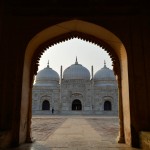
The fairly new tar road that we were driving on came to an end at the Abbasi Mosque in the village of Derawar. We were greeted by beautiful white minarets and domes invoking memories of the Badshahi Mosque in Lahore. A man walked out of the mosque courtyard and Farhaan went to greet him. He asked the man about the graves of the Sahaba that we heard were in this area. He told us to follow the same road towards the exit of the town and we will see water tanks. There we would see the mazaar of the companions of Prophet Mohammed (Peace and blessings be upon him).
Sukkur was the last town of the Sindh province of Pakistan that we were staying in. Next was Punjab. Everyone that heard about our travels up North had told us “Drive though Sindh in one day and get to Punjab”. The lack of speed in our car coupled with our enviable ability of getting delayed when leaving in the mornings meant that this would be impossible. We ended up spending three nights in Sindh stopping to see Kot Diji Fort and Mohenjo-daro. We also got the opportunity to cross the Indus river a couple of times.
The N5 highway is lined with fields of mustard, sugar cane, rice and many others. Fields also means hard working people working their lands all through Sindh and Punjab
Colourful blankets being sold on the side of the highway.
Near the sugar cane plantations we saw people making Gurr – a type of unrefined, solid brown sugar made from boiling sugar cane juice until dry (www.. Gurr is a popular ingredient in sweets, snacks, tea and other dishes.
The other very popular sight all over Sindh was these tractors carrying sugar cane to sugar factories. Here, a long line of them were parked on the side of the road.
While at the guest house in Sukkur we started researching points of interest near the next big city of Bahawalpur. We came across Derawar Fort which was some 170 kms before Bahawalpur about 70 kms off the main highway. We thought of leaving Sukkur and spending the night somewhere immediately after entering Punjab so that we could visit Derawar Fort on our way to Bahawalpur. After speaking to Farhaans uncle we booked a guest house in Sadiqabad.
The drive from Sukkur to Sadiqabad was a mere 170 kms and we planned to be there at around 3pm so that we could get some time to write a blog post. And 3 pm it was, when we entered the town of Sadiqabad and reached the point on Google maps marked with the golden star that tells you that you saved this location.
Umm… Where is the guest house?
Nothing. Just a few old structures and empty pieces of land. We drove around a little in the streets off the main road but only saw more empty plots and private houses. Attempts to call Jovago and the guest house were met with a very calm lady on the other side of the line telling us that the number was not available. We asked a few men sitting in front of a newly built building and they said they do not know of any guest house and gave us directions to another hotel and offered us tea and food which we kindly declined.
Just a side note here, where ever we stopped to ask for directions or chatted to people at a filling station and they heard that we were travellers they would offer us a cup of tea, cold drink or food. Such is the hospitality of the people of Pakistan.
We then went to a shop further down the road to buy airtime for our phone. The man there informed Farhaan that the said Guest House had closed down and directed us to a new “very good” hotel. We decided to check it out and after a wrong turn ended up driving next to a very smelly canal. As we took the U-turn to track back a maroon Suzuki Jimny overtook us on this single lane road with richsaws and taxi’s coming from the opposite direction. A few meters later the said 4×4 suddenly took a sharp turn blocked the road ahead of us and came to a halt. Out came a man with an official rush in his walk to Farhaans window, introduced himself as an intelligence officer, announced that the rest of the team is on their way and asked to see the car papers. By his nervous nature, we knew he was bluffing about the team.
Now, over the 15 countries that we have travelled we’ve been stopped numerous times by all kinds of scary and official looking blokes and we are kind of used to this. So Farhaan casually asked to see his ID and after perusing it showed him the papers. He made a phone call to someone and then told us that it would be best that we leave Sadiqabad and travel to the next town Rahimyar Khan, which we did.
The next day we left for the city of Bahawalpur but with the firm intention of going to Derawar Fort along the way. We only took the turn off for Derawar around 3pm. We couldnt find it on our GPS so decided to use google maps which, for Pakistan, does not give you voice navigation but will provide the route. This meant that we had to watch our position on the map and take the correct turnoffs.
The plan didn’t work out very well when the very first turn was closed off. We looked at the map and found another route to the correct road. As we travelled further the vast green fields, the mustard plantations and desert sand that appeared in between them totally distracted us and very quickly we forgot about the map we were supposed to be keeping an eye on.
Somwhere in this picture, Farhaan is buying our samoosa and pakora snacks.
“Are we on the right road?” Farhaan asked waking up from the dreamy drive that we were enjoying so much. “Oh no”, said Khairunnisa, “we left our turn behind”. So we took a U-turn and drove back through the little village lined with fruit stalls, meat shops, samoosa and pakora (chilli bites) stalls and many more. We were quite hungry so Farhaan pulled up at the samoosa and pakora stall bought some snacks and confirmed directions to the fort.
A couple of wrong turns later, feeling satiated with the very tasty snacks, we were on the straight, fairly recently tarred road to Derawar. The road again was lined with bright yellow mustard plantations on one side and green meadows on the other. These would abruptly give way to desert sand with shurbbery and small dunes and that would suddenly turn back into alternating green and yellow fields.
The road took two bends and we saw a big sign across the road announcing our arrival at the Derawar Fort. We continued to drive and the road wound through a sparsely populated village with neat mud houses and a few grocery shops. The road ended at a spectacular but not huge white mosque reminiscent of Mughal style architecture with a courtyard that has 3 entrance doors. This mosque, also called Derawar Mosque is apparently built as a replica of the Moti Mosque in Delhi, India. The main entrance faces a body of water that according to some, was once a large river whose banks use to be quite close to this entrance. It enters into the courtyard of the Abbasi Mosque with the white domes and minarets greeting the visitor.
The sign that welcomes visitors at the only road entering the village.
Walkway to the masjid
A window in at the mehrab provides a view of the Fort.
The main entrance door exits out to a lake that used to have a lot more water in the old days.
This the entrance structure of the Abbasi Mosque
From the main entrance the while domes of the mosque greet the visitor.
From here we drove our car a very short distance through a large entrance gate and along a narrow path that led us to the Derawar Fort. The fort stood in front of us in its former glory but showing definite signs of ageing. Many of its forty bastions towered over as we stopped our car and took in this magnificent sight. There were parts where bricks had fallen off and the entrance gate was closed. We later learned that visiting inside is not allowed as the building is vulnerable to the elements given its age and lack of restoration efforts.
Domes of the mosque as seen from the large entrance gate that leads to the fort. We drove in through this gate
The narrow path with the fort peeping through.
The entrance gate now closed to visitors.
The 40 bastions of Derawar Fort are what gives this unique appearance.
The Abbasi Mosque as seen from the Fort
A view of Derawar Fort with a traditional mud hut in the foreground.
We now feel honoured and sad to have visited the endangered site that stands like a shining jewel in the Cholistan desert. If attention is not given to the restoration of the Derawar fort, future generations will not get to experience this piece of historical architecture.
A few photographs later, we went in search of the Sahabah that we had confirmed lay near by. We drove through a small patch of desert sand back on to the only tar road of Derawar and after a couple of minutes saw a white structure with green flags denoting the resting place of those close to God. We turned of the tar again and drove a few meters to towards the Mausoleum.
Graves of four Sahaba (Companions) of Prophet Mohammed Peace and Blessings be upon him.
As we walked through the graves outside and came closer to the white building we were stopped dead in our tracks by the most beautiful sweet fragrance in the air. We stood there for a few moments just taking in this scent and then went inside. We spent a few minutes in silence and offered our supplications for the Sahabah that lay there and left feeling blessed and happy to have stood in their company.
Four companions named Tahir, Jawwad, Tayyib and Ameer Jama’at – May God be Pleased with them.
Four companions named Tahir, Jawwad, Tayyib and Ameer Jama’at – May God be Pleased with them.
One of the grave sites
The sun was starting to set as we made our way to Bahawalpur city but that did not deter us from stopping to take some photos of the mustard fields and the beautiful sunset.
It has become somewhat of a travel custom during our nine months of overlanding that we end up in the lesser known and perhaps even less enthusiastically visited places. So when Farhaan’s cousin Rahil bhai suddenly asked: “Gwadar chalna he?” (Do you want to come to Gwadar?) Farhaan automatically responded in the positive. We had only heard of Gwadar from Rahil Bhai as he is often there for business. We soon realised that there was much to see and even more about Gwadar that added to a new perspective on Pakistan’s development.
The road to Gwadar
We drove from Karachi crossing a starkly contrasted densely populated metropolis towards the Makran coastal highway about a hundred kilometres away to an isolated semi desert. The drive is a roughly 650 kilometre stretch mostly along the Arabian Sea and runs through the Sindh and Balochistan provinces passing smaller port towns of Ormara and Pasni. What makes this drive most interesting though is that it passes through Hingol National Park, which is the country’s largest. It is mainly coastal semi-desert with the most intricate and unique rock formations that keeps your head moving constantly from side to side so you don’t miss any of it.
Untouched beaches in Hingol National Park
The rock formations intermittently give way to views of kilometres of unspoilt uninhabited beaches which reminded us a bit of Kosi Bay and surrounds in South Africa. At some points in the park one gets the sense that you are lost in a miniature version of the Grand Canyon. It is maze after maze of natural formations along steep and winding roads. Fauna includes a number of mammals, amphibians and birds including the Ibex, Urial (a sub species of wild sheep) and Gazelle.
Despite our best efforts, it was impossible to view any of the animals as the dunes and rock formations present ample opportunity to be furtive. Amongst the formations, some of the most popular include the well-marked “Princess of Hope” as well as another that resembles an Egyptian Sphynx.
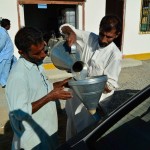
Not the conventional petrol station
The entire road is good tarmac with military check-posts and smaller villages spread about a couple hundred kilometres apart. The journey that takes 1 day today used to take 2 days a few years ago. The name Gwadar is made up of two words – ‘Gwa’ referring to wind and ‘dar’ meaning ‘door’. Thus Gwadar is the door of the wind. We were shown a deep cut in the hills of Gwadar which gave the city its name.
Located at the mouth of the Persian Gulf, this small fishing village was owned by Oman until 1958. Since then it has grown into a port city due to its unique hammer-head shaped peninsula protruding into the Arabian Sea. It has been earmarked by the Governments of Pakistan and China as the coastal start of the China Pakistan Economic Corridor (CPEC) and is therefore destined to become both a business and tourist hub of Pakistan within the next 10 years.
Gwardar City – A strip of land in the sea.
The beach where all the fishing boats park off.
A street in Gwadar city
Unspoilt beaches not yet accessible from the Hammer-head.
The PC hotel on the Hammer-head of Gwadar. The hill is called Koh-e-Murdar
On our weekend visit we were treated to a stay at the Pearl Continental Hotel, tours of Gwadar and traditional Baloch lunch followed by a fishing trip. Pearl Continental Hotel is built on the edge of the hill that forms the Hammer-head shape, seen in the picture below. It boasts views of the sea on one side and the city of Gwadar on the other.
One of the main projects of CPEC is the building of a road that will link Gwadar to the Karakorum Highway in Khunjerab. This will allow Chinese imports from the Persian Gulf countries to travel to China through a sea, road and rail network over only 2000 kms instead of the current ship journey of 12900 kilometres.
If like us you are the kind of overland traveller, that is looking for picturesque, out-of-the-ordinary places that are not frequented by many travellers then Gwadar is the place to visit. It is however important to note that there this region is known to be dangerous for foreign travellers so try to get a Pakistani friend or tour guide to take you.
The road to Gwadar
A natural Sphynx
Road to Gwadar
Road to Gwadar
Untouched beaches in Hingol National Park
Princess of Hope – popular attraction of Baluchistan and Hingol National Park
Hingol National Park structures
Canyons of Hingol
The canyons of Hingol National Park
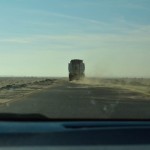
Many trucks slip off this road into the ditches. But this one had a narrow escape.
Not the conventional petrol station
Not the conventional petrol station
View from the road
View from the road
Smaller structures
Selfie
Another incredible roadside artwork
Hingol National Park
Fishing boats
Picture perfect
View of the Hammerhead
The PC hotel on the Hammer-head of Gwadar. The hill is called Koh-e-Murdar
Gwadar Port
We scared them off.
Unspoilt beaches not yet accessible from the Hammer-head.
Almost ready for the sea
Whale bones!
This donkey went to collect fish from the boats
Spot the donkey
A fishing village
Fishing boats being built along the shores of the Arabia sea in Gwadar
Gone Fishing
Sunset while fishing
Sunset on the boat, not the easiest to get a clear shot on a speedboat
Fishing boats parked after a day of fishing
Gwadar City Mosque
A street in Gwadar city
The beach where all the fishing boats park off.
Gwardar City – A strip of land in the sea.
Fishing boats in the making
On the boat, we assumed this guy to be the navigator, he was awesome and this shot of him and the sunset in the background was apt
As we get closer to Pakistan, we thought it would be a good time to tell you this story.
People respond with amused curiosity and mostly disbelief when we introduce ourselves as overland travellers. It seems that “brown” people are an unusual demographic in the South African overlanding community which could explain this reaction.
Farhaan however does have the land travel bug in his family blood from way back in the 60’s. His grandmother Zaynub Bibi, grandfather Goolam Rasool Mia and their three daughters Rabia Banoo, Hasina Banoo (Farhaan’s mother) and Mehmooda Banoo embarked on an epic overland journey in their Land Rover Defender from South Africa in 1964 to perform their pilgrimage (Hajj) and finally ended in India with the return journey being completed by ship in 1966.
Their journey was unique and we draw inspiration from it. We cannot speak of their experiences on their behalf as we fully understand that each persons journey has it’s own purpose. The challenges faced during that time would also have been vastly different. In short there can be no oversimplified comparisons.
Countries such as Iraq and Syria were definitely on our wish list, but given the geo political state of the region, were completely out of bounds for us. They travelled through East Africa, Middle East and Asia and recall fondly their travels through Iraq and the Sham region.
Navigation would also have been a completely different excercise on the road then – compasses and paper maps vs. Garmin GPS and iPads. Add to that the fact that in those days tarmac in Africa was as easy to come by as good South African chocolate in Kenya. A hand drawn map of Africa on the side of the Defender by a kind gentleman was the result of one such routing encounter.
On the return journey when their ship docked in Karachi, Rabia Banu (aged 13) and Hasina Banu (aged 7) were betrothed to two sons of Abdul Jabbar Khan, a family friend who hosted the travellers when they drove through Pakistan. These two unions not only resulted in a gang of rather good looking ‘real’ cousin brothers and sisters with roots in two continents but also serves to question our modern stereotypes around arranged marriages.
So there you have it, the short personal story of how brown people do overland and sometimes they even bring back extended family. Farhaan’s overlanding genes, combined with Khairunnisa’s love for change and new experiences made The Khan Playground inevitable and we look forward to many many more adventures to come.
Goolam Rasool Mia posing with their Defender and Caravan in a village in India.
Thinking about it now, R1600 (approx. 114 USD) for a room in a five star hotel is pretty cheap, but when you are an overland traveler counting every penny that you spend, bargaining (and in some cases begging) becomes a habit.
Our drive to the border began late morning, after we bade farewell to Ali Cemal (pronounced Jemal) – the owner of the little restaurant and campsite, that we had made our home base in Trabzon, Turkey. The Georgian border was just over 200 kms away so we thought a leisurely drive along the Black Sea would get us there in time.
Little did we know that while these thoughts ran through our heads and we settled into the drive, a very excited farmer, driving a red lorry with his wife and the load bay full of cows was eyeing our truck. What happened next was the subject of a Facebook post on our page:
“We are always a few hours late, but sometimes it has a hilarious and heart warming story behind it. We were making our way out of Trabzon to Georgia when a red lorry carrying about 5 cows kept driving up to the side of us. The cutest old couple would excitedly wave at us. The eccentric driver of said lorry followed us from a small town Macka into the city centre, pulled us off the road and literally whisked us to his younger brothers cafe – Cafe Aloha – for a tea and a chat. Davut Celeb owner of cafe pictured at the bottom”
Davuts brother had asked us to wait for him at the cafe while he quickly delivered his cows. We waited a while but then asked Davut’s leave as border crossings are always a stressful event. As we got close to the Sarp border crossing, we passed through the border town of Kemalpasha and experienced a feeling that was familiar to us from most border towns we had passed.
There is this sense of dodginess and desperation. You see people who are in a state of some stress, be it the urgent need to get across the border or the stress of not having the right papers or the worry of being caught out by Customs for the goods they want to take across and sell. Then you see the dodgy characters lurking around figuring out ways to take advantage of these desperate people. Don’t get me wrong, it is very seldom that an entire town gives off this eerie vibe but more the main road that leads to the border and most often than not, that is the only part of the border town passersby experience.
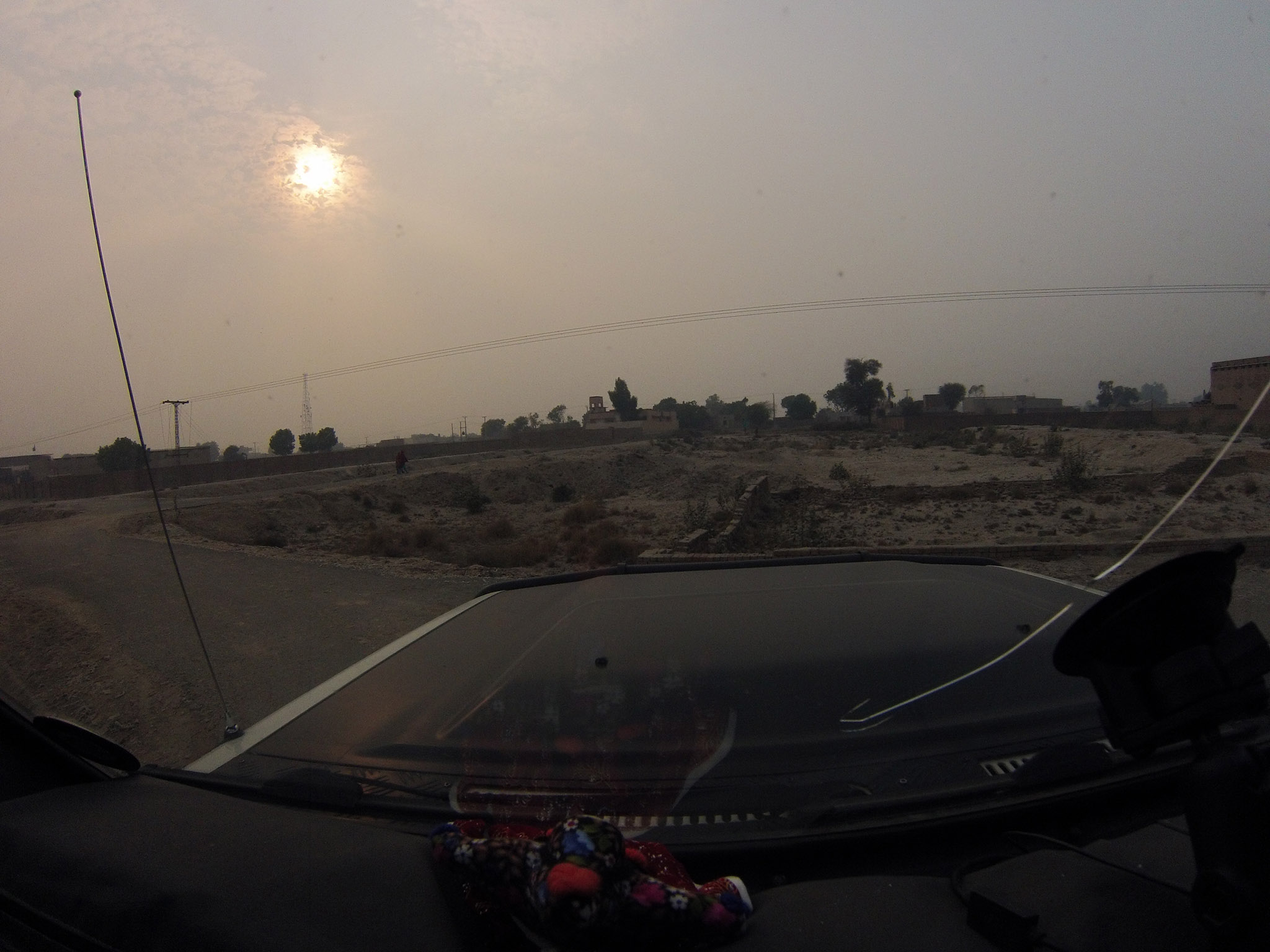
When we arrived at the border we saw a long queue of cars and I got confused about the process. Since it was time for the Maghrib prayer, we said our prayers and made our way to the border office on foot to try and figure out the process. Before we knew it our passports were being stamped and only then did we realize that the ‘foot queue’ was only for those who were crossing the border on foot and for passengers of the cars!
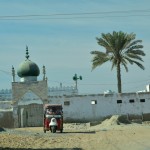
Masjid at the Sarp Border Crossing
Panicked, we tried to explain to the Turkish officials that we want to cross in our car and in true Turkish fashion, without any stress (even with hundreds of people in the queue), they stamped us back into Turkey, told to us get in the vehicle queue and drive to the crossing. I remember thinking to myself, I should just listen to K!
We eventually got across the border – me in the car and K on foot – and met on the Georgian side. The process here was quick and efficient and we were in a country we had never in our wildest dreams thought of visiting (Read about that here).
By the time we had exchanged our money and started driving away from the border it was 8pm. At this point we had no idea where we would be spending the night. We thought we could find a hotel in the popular tourist town of Batumi. We had read that Batumi, the second largest city in Georgia, was a resort town, but didn’t realise that gambling is one of it’s main attractions.
We decided against sleeping here and found a campsite on our GPS about 60 kms out. As we neared the campsite the GPS told us to get off the main road onto a dirt road. We followed the directions along extremely dark roads, which did have houses but these were very dark too. We figured that this might be a holiday destination and the houses were most likely holiday homes that were not occupied.
When we got to the location, we saw nothing but an empty patch of land, adjacent to a double story house where the lights were switched on. We tried to get somebody’s attention to see if we could get some information on the campsite but were unlucky. We drove up and down the road, trying to find the right place and then decided to give up.
The GPS also indicated a B&B nearby and we thought this will have to be our accommodation for the night. Through the more dark streets we arrived in front of a house that had one light switched on outside and the flashing of a TV screen on the inside. We rang the bell, knocked and hooted until a silhouette of a person looked through an upstairs window at us. He motioned to us that B&B was closed. We were perplexed.
Out of options we decided to try Kobuleti, a town we had bypassed on our way to the campsite. The GPS indicated many hotels here and so we felt hope. It was already close to 10 pm and in our exhaustion were desperate enough to settle for the first hotel room we found.
The streets of Kobuleti were wide, there were street lights but roads were deserted. We came to the first hotel which was very quiet, almost shut down. After knocking on the door a while someone eventually emerged, smiled and invited us in. The reception was modern and well kept. This looked like a good hotel. He told us that the hotel was closed and tried to get hold of the manager to see if he could give us a room. No luck – he allowed us to use the bathroom and we continued on our quest. The second and third hotels were exactly the same, we rang bells at receptions, knocked on doors and hooted but there was no response. We realised that this may have been the off-peak season and hence there were no visitors in town.
We avoided The Georgia Palace Hotel on the GPS list because it sounded too expensive. At this point, our choices were rather slim. It was either, find a room or spend the night in the streets of a city and country we didn’t know much about.
The gates to The Georgia Palace hotel opened as the gates of any palace would. We drove down a long drive way and got to the 5 star reception. With knots in our stomach we went in and found someone there. They were open! We were tired, but gathered up the strength to haggle and bring the price down a bit before we accepted and paid.
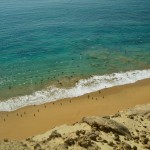
We ordered a veg pizza, ate and enjoyed a good nights sleep. In the morning before continuing on our journey, we took a walk along the beach and wondered what this place would be like in the busy season.


















 When we arrived at the border we saw a long queue of cars and I got confused about the process. Since it was time for the Maghrib prayer, we said our prayers and made our way to the border office on foot to try and figure out the process. Before we knew it our passports were being stamped and only then did we realize that the ‘foot queue’ was only for those who were crossing the border on foot and for passengers of the cars!

